Best Email Follow Up Tools for Busy Pros: Track Replies, Not Opens

We recommend an email follow up tool that tracks whether someone actually replied, not just whether they opened your message, and surfaces overdue, deadline-driven, and financially consequential emails before they slip away. If you’re drowning in messages and worried about what you might be missing, that distinction matters more than any other feature on the market.
TL;DR:
- Choose a tool that detects unanswered messages rather than read status, because reading a thread does not confirm that anyone resolved it.
- Rank dates, deadline language, financial terms, contract details, and unanswered conversations ahead of newer mail, rather than sorting only by sender or volume.
- Gmail snooze handles precise deferrals, and Outlook flags store reminder dates, but neither offers consequence ranking or reply tracking across multiple accounts.
- Connect your primary inbox, enable reply detection, and group deadline, payment, and legal threads; then reserve five to ten minutes daily for review.
- theNeedle charges $9.99 monthly or $99.99 annually, with a free trial on both plans, so test it with an active thread before subscribing.
Table of Contents
- What makes theNeedle different from snooze and stars
- How theNeedle finds the messages that matter
- What to look for when evaluating follow-up tools
- A quick setup checklist to start tracking follow-ups today
- Habits that keep your follow-up system from breaking down
- Why consequence matters more than clutter
- Try theNeedle and stop guessing which emails matter
- FAQ
- Sources
What makes theNeedle different from snooze and stars
Most inbox tools sort by sender, folder, or volume. They ask you to manage everything equally, which is exhausting when only a handful of messages actually carry a deadline, a payment, or a legal consequence. We built theNeedle around a different question: what happens if you ignore this message? That consequence-first lens changes which emails rise to the top of your day.
The tool tracks replies rather than opens, so it knows when a thread is genuinely unresolved instead of just unread. It connects to popular email providers, which means you’re not stuck managing separate follow-up systems across accounts. Many such tools offer free trials that let you test their approach before committing.
Here’s what sets the approach apart:
- Consequence-first ranking instead of sorting by sender or folder volume.
- Reply-state tracking that flags threads still waiting on a response from you or someone else.
- Cross-platform support across the inboxes most professionals already use daily.
How theNeedle finds the messages that matter
Underneath the interface, theNeedle reads for signals that correlate with real consequences: date mentions, deadline language, financial keywords, contract terms, and whether a thread has an unanswered reply sitting in it. That’s a meaningfully different scaffolding around your attention than a tool that just counts unread messages.
One figure worth sitting with: the average worker receives 117 emails daily, according to our own research on email volume and missed deadlines. That volume is exactly why open-based reminders fail. You can open a message, get interrupted, and never resolve it. Reply tracking catches that gap.
The practical payoff shows up in a few places:
- Fewer deadlines fall through the cracks because the system flags date-sensitive threads automatically.
- Overdue conversations get resolved faster because they’re ranked by urgency, not buried by newer, less important mail.
- You spend less weekly time triaging, since the inbox itself does the first pass of sorting.
We built this after watching how often a single buried email, a missed refund window or an unanswered contract clause, costs more than the hours spent reading everything else combined. Consequence tracking isn’t about reading less. It’s about reading the right things first.
What to look for when evaluating follow-up tools
Not every tool marketed as a “follow-up” solution actually tracks the thing that matters. Here’s a short checklist drawn from platform documentation and common feature gaps:
- Reply tracking over open tracking. An opened email tells you nothing about resolution. Apple Mail’s Remind Me feature already nudges you when a sent message hasn’t received a reply after a few days, which shows even native mail clients recognize this gap.
- Short-term snooze plus long-term reminders. Gmail’s snooze function handles deferring a message to a precise later time, but it isn’t built for tracking weeks-long threads with shifting deadlines.
- Action metadata, not just a flag. A useful system captures who owns the follow-up, a start date, a due date, and a short reminder note, similar to how Outlook’s flag fields work.
- Cross-account support. If you manage more than one inbox, your follow-up system needs to work across all of them, not just one.
- Simple, single-handed daily use. A tool that requires a complicated setup every morning defeats its own purpose.
Pro Tip: Test any follow-up tool with one real thread you’re actively worried about forgetting. If it surfaces that thread correctly within a day, it’s doing its job.
A quick setup checklist to start tracking follow-ups today
You don’t need a weekend to get this right. Most of the setup fits into a single sitting.
- Connect your primary inbox and grant the permissions needed for read and reply detection.
- Turn on reply tracking, or the closest equivalent, so unanswered threads surface automatically.
- Create a consequence-driven view that groups deadlines, payments, and legal or contractual messages together.
- Block out five to ten minutes daily for review, and set your reminder cadence to match how often you can realistically check in.
- Test the system with two live threads, one you expect a reply on and one you don’t, and confirm the tool resurfaces the right one based on reply state.
If you want a slower walkthrough of this process, our guide to tracking high-impact follow-ups in one sitting covers the same steps in more depth. Once the basics are running, the daily habit becomes the real differentiator, not the software itself.
Habits that keep your follow-up system from breaking down
A good tool only works if your habits support it. A few adjustments make a real difference:
- Batch your follow-ups into one sitting instead of reacting to each reminder as it pings, which keeps context switching to a minimum.
- Tag messages by consequence type, finance, deadline, or customer, so triage takes seconds instead of minutes.
- Use snooze for short deferrals and dedicated reminders for threads that will stretch over weeks.
- Don’t treat archiving as abandonment. On Apple Mail, Remind Me physically moves a message back to your inbox when the reminder fires, while Gmail simply keeps archived mail searchable. Know which behavior your platform uses before you assume an archived thread is handled.
Pro Tip: If you manage outbound campaigns alongside personal follow-ups, list hygiene practices that reduce hard bounces can keep your sending reputation intact while you clean up your reply backlog.
Why consequence matters more than clutter

I’ve spent enough time watching smart, capable people miss a refund deadline or a contract renewal, not because they were careless, but because their inbox gave every message the same visual weight. That’s the real problem we set out to solve with theNeedle: not reducing email volume, but changing what gets attention first.
The people who benefit most aren’t necessarily the most disorganized. They’re often the busiest, the ones juggling multiple accounts and too many legitimate priorities to triage every message by hand. If that sounds like you, the quick setup checklist above is worth running through today, with the free trial, before the next deadline buries itself in your inbox.
— Glen Bover
Try theNeedle and stop guessing which emails matter
We’d rather show you than tell you. The theNeedle live page walks you through the free trial, and most people have their inbox connected and their consequence-driven view built within minutes.
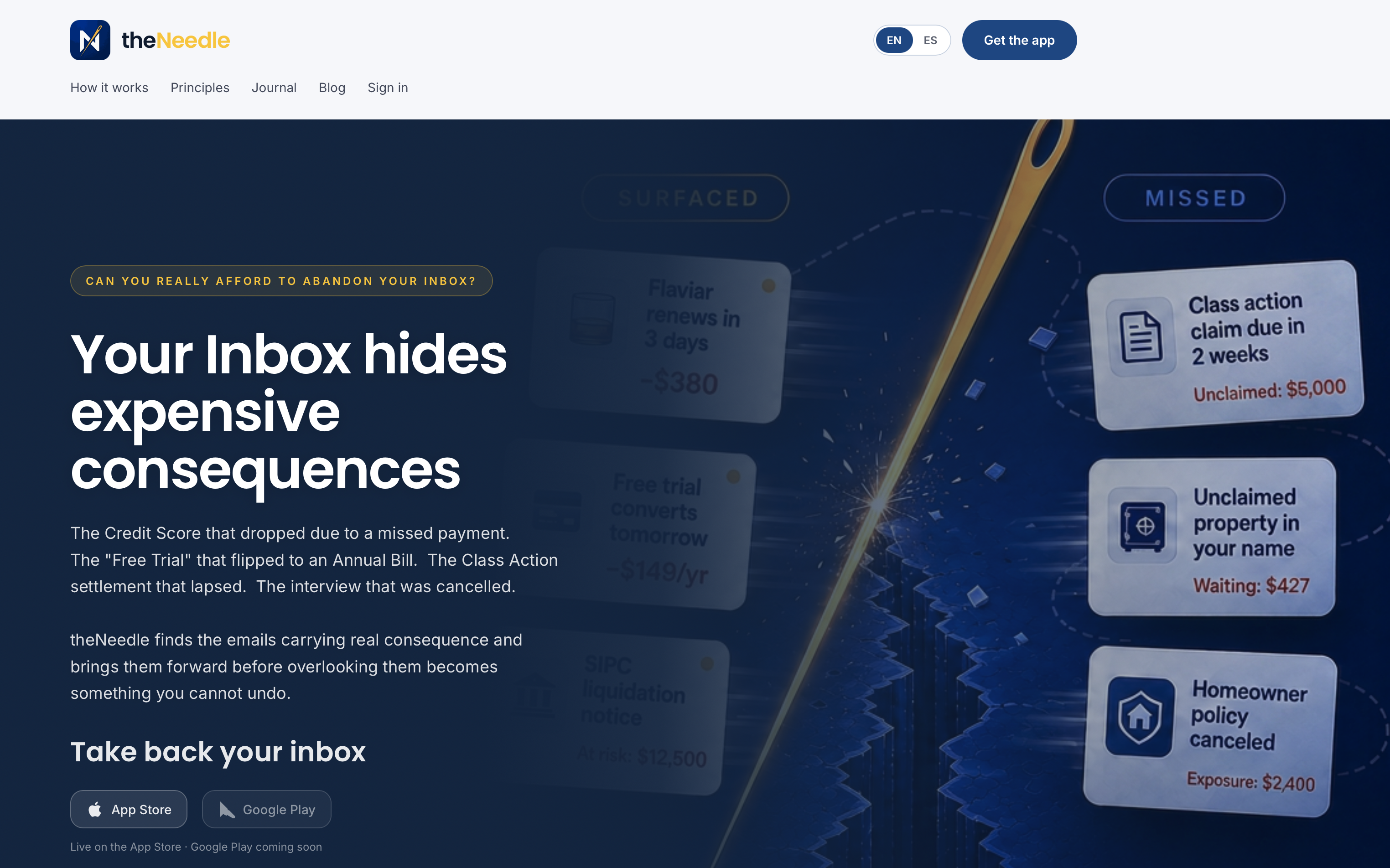
During the trial, expect theNeedle to flag your overdue and deadline-sensitive threads from day one, with reply tracking running quietly in the background so you’re not manually checking who answered what. By the end of the first week, most of what used to require a daily scroll through your whole inbox gets handled by a shorter, sharper list. Pair it with the quick setup checklist above, and you’ll have a working system before your coffee gets cold.
FAQ
What is the best way to track unanswered emails?
The most reliable method tracks reply state rather than whether a message was opened, since open tracking can’t tell you if a thread was actually resolved. Tools built around reply tracking flag threads that are still waiting on a response, which keeps genuinely unresolved conversations from getting buried.
How much does theNeedle cost?
theNeedle offers a monthly plan at $9.99 per month and an annual plan at $99.99 per year. Both include a free trial period before billing begins.
Do Gmail and Outlook already have follow-up reminders built in?
Yes. Gmail offers snooze for deferring messages to a specific time, and Outlook uses flags with reminder, start date, and due date fields. These native tools handle basic deferrals well but don’t rank messages by consequence or track reply state across multiple accounts.
Does archiving an email count as handling it?
Not necessarily, and the answer depends on your platform. Apple Mail’s Remind Me feature physically returns a message to your inbox when a reminder fires, while Gmail keeps archived messages searchable but out of your main view, so you should confirm your tool’s archive behavior before assuming a thread is resolved.
What features should I check before choosing an email follow-up tool?
Prioritize reply tracking over open-based reminders, cross-account support for every inbox you use, and action metadata like owner, due date, and reminder text. Review commentary on platforms like Capterra also points to long-term reminder handling as a meaningful differentiator from native snooze features.
Sources
For readers who want to check platform-specific behavior directly, we relied on Google’s snooze documentation, Apple’s Remind Me guide, and review commentary from Capterra and G2 covering email management platforms.
- Boomerang reviews and product information on Capterra
- Snooze email or reminders until later - Google Workspace Learning Center
- Use Remind Me to come back to emails later in Mail on Mac - Apple Support