ADHD Awareness — 2026-12 · 4 min readEN
Self-Compassion as Strategy: The Kindest Voice Is the Most Productive One
Shame doesn't keep you accountable — it keeps you from trying again. The final post in this series makes the case for kindness as a performance tool, not a consolation prize.
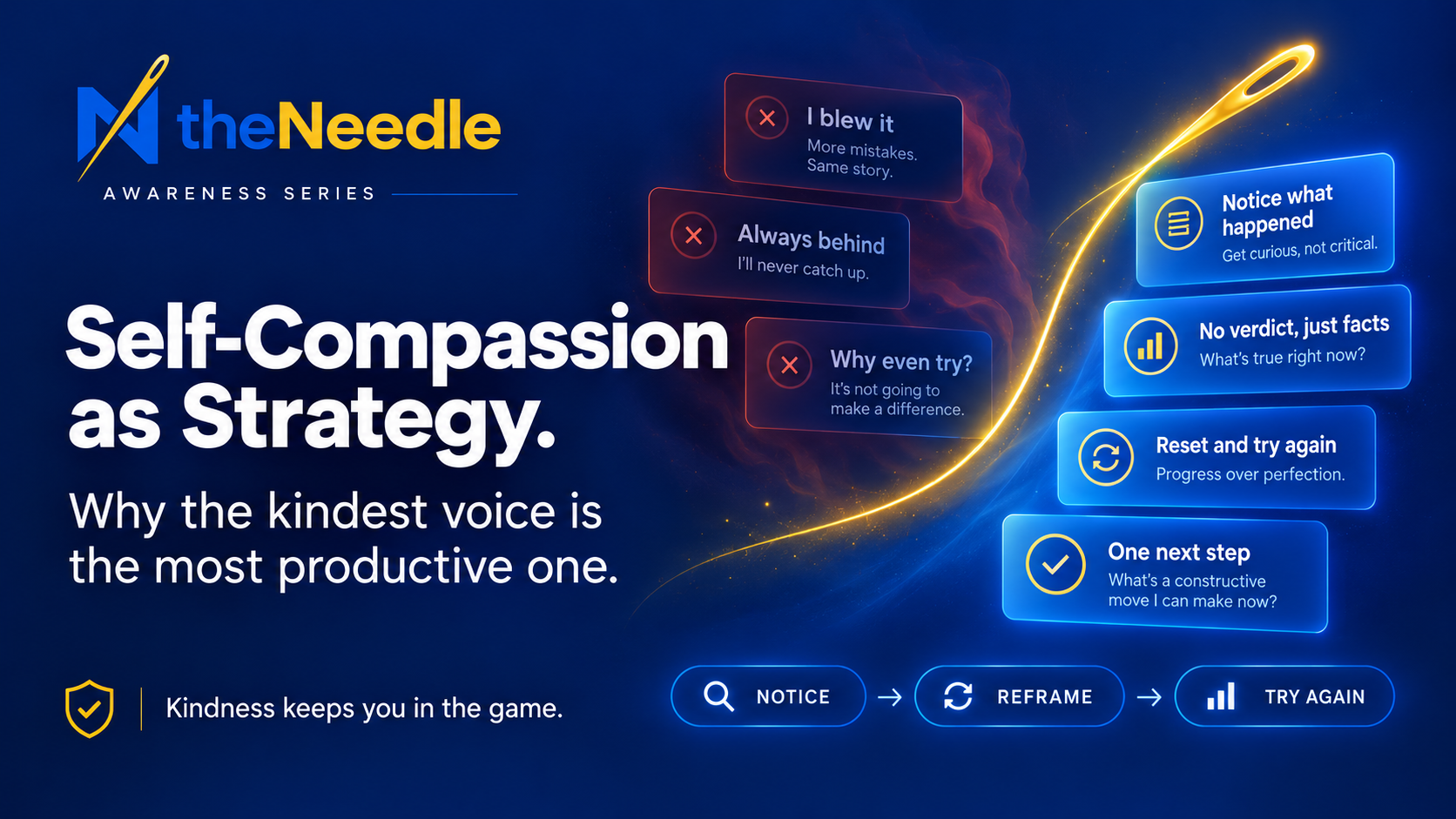
The last blocker isn't a system problem
Eleven weeks in, you've read a dozen ways to build scaffolding around executive function: capture everything, make time visible, shrink the first step, find a body double, automate the money leaks, get assessed, get coached. All useful. None of it sticks if the voice narrating your day is contempt.
Shame is not a deterrent — it's a depressant
The instinct is to think a harsh inner voice keeps you accountable — that if you stop being hard on yourself, you'll get worse. The evidence runs the other way. Shame doesn't sharpen behavior; it shuts it down. People who feel fundamentally broken hide the pile instead of opening it, cancel instead of texting to reschedule, avoid the banking app instead of checking the balance. Self-compassion isn't the reward for finally doing better. It's the precondition for being willing to try again after the last attempt didn't work.
What self-compassion actually looks like (it isn't "it's fine")
Self-compassion as a strategy has a specific shape: notice what happened without editorializing about what it means about you. "I missed the renewal" is a fact you can act on. "I'm the kind of person who always screws this up" is a verdict that makes the next attempt feel pointless before you've made it. The skill is catching the jump from the first sentence to the second — and stopping there.
Start here
Jessica McCabe's TEDx talk, "Failing at Normal: An ADHD Success Story," is the clearest public telling of this exact arc — years of shame, then a decade of building a life that actually works, from someone still building it. It's the natural close to a series that's been making her point from every other angle: it's not that you're doing life wrong. It's that you're doing it without the instructions your brain actually needs. Build the version that works for yours.
This is an awareness series, not medical advice. A licensed clinician can help you understand what's going on.
One obligation at a time, from the inbox you already have.
theNeedle is live on the App Store and Google Play.
Get the app